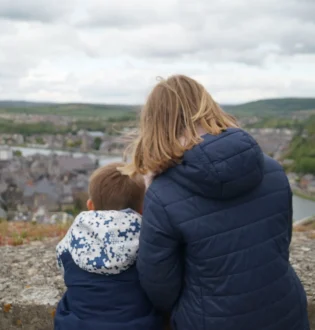



Come and discover the town of Revin, which has a great industrial heritage and traces the emblematic history of certain families.
Hello to everyone,
Here I am again, always present to talk to you, in brief, about the cities of our territory. Today, let's talk a bit about visiting the industrial town of Revin.
If you are still looking for ideas for visits or discoveries, follow me and let's discover together some interesting points about this city with a rich industrial past, let's go!
Presentation of the town of Revin: rich in its industrial past
Revin is a town located in the Ardennes department. It has a population of just over 6000, whose inhabitants are called Revinois (masculine) and Revines (feminine). The town is known for its rich industrial heritage, which was once characterized by a thriving economy. It's also worth noting that the town is divided into six districts. To delve deeper into the history of this town, I must first discuss its industrial past.
An industrial family from Revin: The Faure family
As I mentioned earlier, the town of Revin is known for its rich industrial heritage. What better way to illustrate this than to recount the history of a legendary family of the town, who contributed to the rise of its industry: the Faure family.
So, Théodore Faure came to work for the Ardennes railway company during the 19th century. In 1854 , having managed to save some money, he decided to open his first business in the town of Revin in order to develop industry there. Initially, it was a nail factory, then later he moved into foundry work.
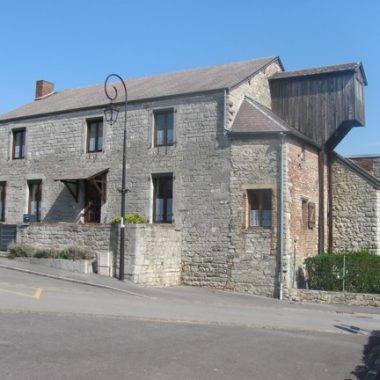
Given the company's prosperity and growth, Théodore Faure decided to expand in 1858 by acquiring the businesses located opposite his current premises, and then by building a family home. Today, this is the Rocheteau Park house. Purchased in 1972 by the town of Revin, it now houses an art gallery.

Rocheteau Park
Creation of the Cité FAURE, an industrial city
It should also be noted that the Faure family , given the prosperity of their business and out of concern for the well-being of their employees, had a housing estate built to accommodate them and to comply with the company's social plan. Thus, between 1931 and 1934, Maurice Roucquet of Charleville built 44 houses in 7 blocks, each with a garden at the rear, in the Sarnison district. Furthermore, a chapel, called " Saint-Eloi Chapel ," was built at the entrance to the estate.

There are other things to discover in this industrial city in the Ardennes, including: the Spanish house.
Themes